

The Most Rebellious Book on Campus
The most radical book you can read on campus today has nothing to do with overthrowing the government. It’s the one that created it.
For decades, the story you got in class was simple. The American Founders were old, they were flawed, and their ideas are irrelevant at best, toxic at worst. The Constitution was framed as a document to protect property, not people. The Declaration of Independence was just the fine print on a hypocritical deal. You were taught to “problematize” and “deconstruct” but rarely, if ever, just to read.
The message was clear: Trust the experts who have read these texts for you. They’ve done the hard work, and the verdict is in. Case closed. Move on to more enlightened ideas. But a generation that was told to trust the experts on everything is starting to do the most rebellious thing possible. They’re checking the receipts for themselves.
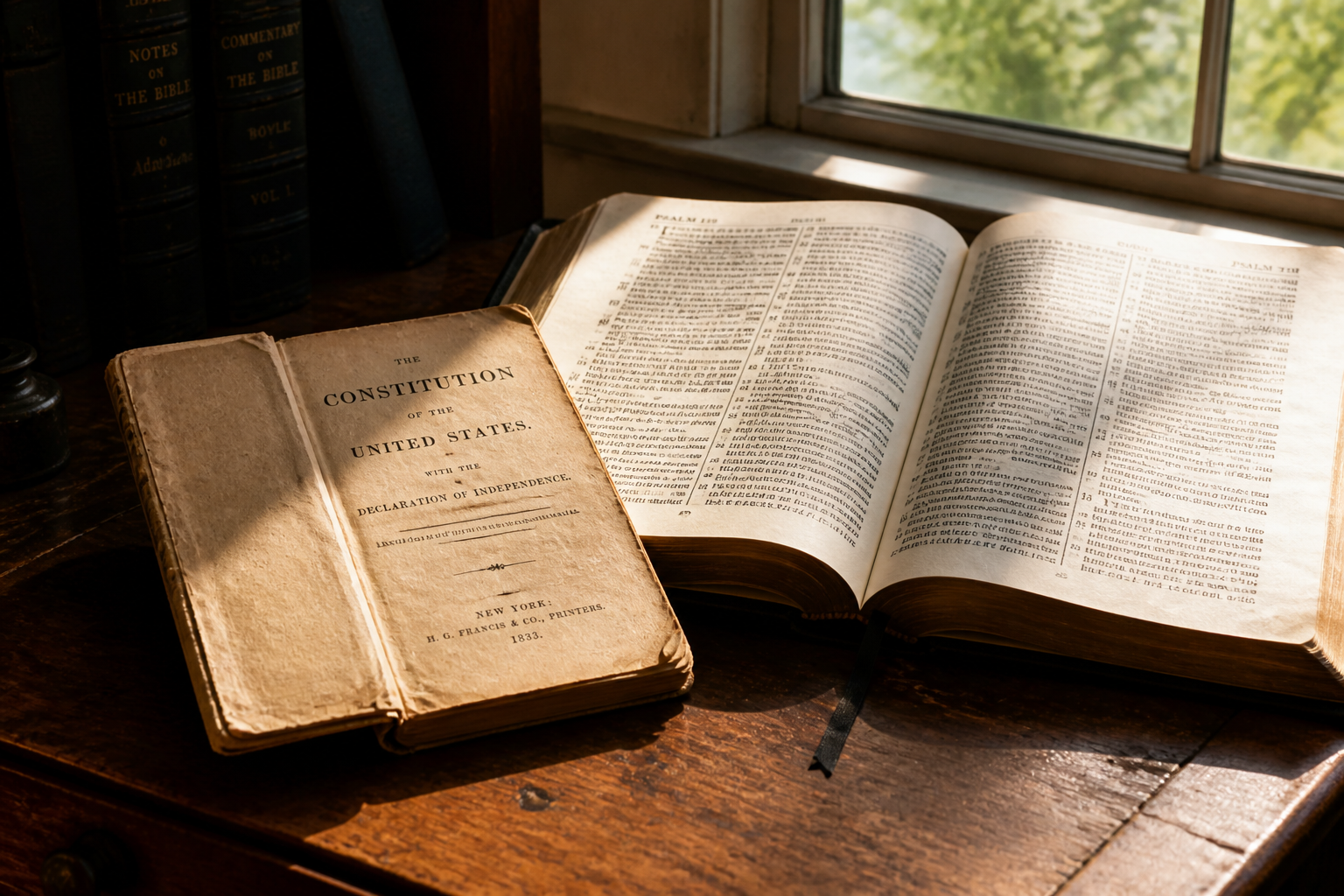
On campuses across the country, a quiet counter-revolution is happening. It isn’t loud. It doesn’t involve protests or picket signs. It happens when a student downloads the Federalist Papers to their phone or spends five bucks on a pocket Constitution. It’s a rebellion of primary sources. It’s a generation deciding to stop listening to the commentary and finally read the book.
This is happening for a reason. When every institution seems to be failing, you start looking for a foundation. When every answer you’re given feels like a political spin, you start searching for first principles. It’s no wonder that basic civic knowledge is in free fall. A 2023 survey from the Annenberg Public Policy Center found that only 47% of U.S. adults could name all three branches of government, a significant drop from previous years. When the system stops teaching, the students have to teach themselves.
And what they’re finding is shaking up the narrative. They are discovering that James Madison, Alexander Hamilton, and their peers weren’t trying to build a perfect world for perfect people. They were trying to build a durable republic for flawed, fallen, real people. They knew human nature. They knew the temptations of power. That’s why they separated it. They knew that a government big enough to give you everything you want is a government big enough to take everything you have. So they limited it.
They are reading about checks and balances and realizing it’s not a bug in the system, it’s the main feature. They’re reading about federalism and understanding that the Founders never intended for a handful of distant politicians to make every decision for everyone. They are reading the Bill of Rights and grasping that those freedoms don’t come from a government, but from God. They are a birthright the government is forbidden to touch.
They were told the Founders were the problem. They’re discovering the Founders are the solution.
Of course, the people who wrote these documents were imperfect. The critique that they failed to live up to their own ideals is not wrong, it’s just incomplete. They built a system whose principles would eventually force the nation to confront its own sins, a system that contained the tools for its own correction. The genius of the founding is not that it created a perfect union, but that it created a framework for “a more perfect Union,” as the Preamble says. It’s a project. It’s a goal. And it’s our inheritance to continue.
This search for truth has a spiritual echo. The same intellectual courage it takes to question a lecture hall’s dogma is the courage required to ask the big questions about life, purpose, and God. To seek truth, you have to believe truth exists. The Founders did. They called them “self-evident.” They believed our rights were endowed by our Creator. That isn’t just a throwaway line. It is the anchor of the entire American experiment. Without it, rights are just permissions granted by the state, and they can be taken away by the state.
Being the conservative kid in class used to mean keeping your head down. Now it means you’ve done the reading. It means you’re coming with questions that can’t be dismissed with a talking point. It means you’re more interested in the ideas that built Western Civilization than the ones trying to tear it down.
So don’t take your professor’s word for it. And don’t take mine. Read it yourself. Go find the Declaration of Independence and read it, slowly. Pick one of the Federalist Papers, maybe No. 10 or No. 51, and give it a try. See if these men sound like the cartoon villains you were told they were. See if their arguments about human nature, power, and liberty still ring true. The most powerful act of rebellion in an age of conformity is to do your own thinking. Start today.
